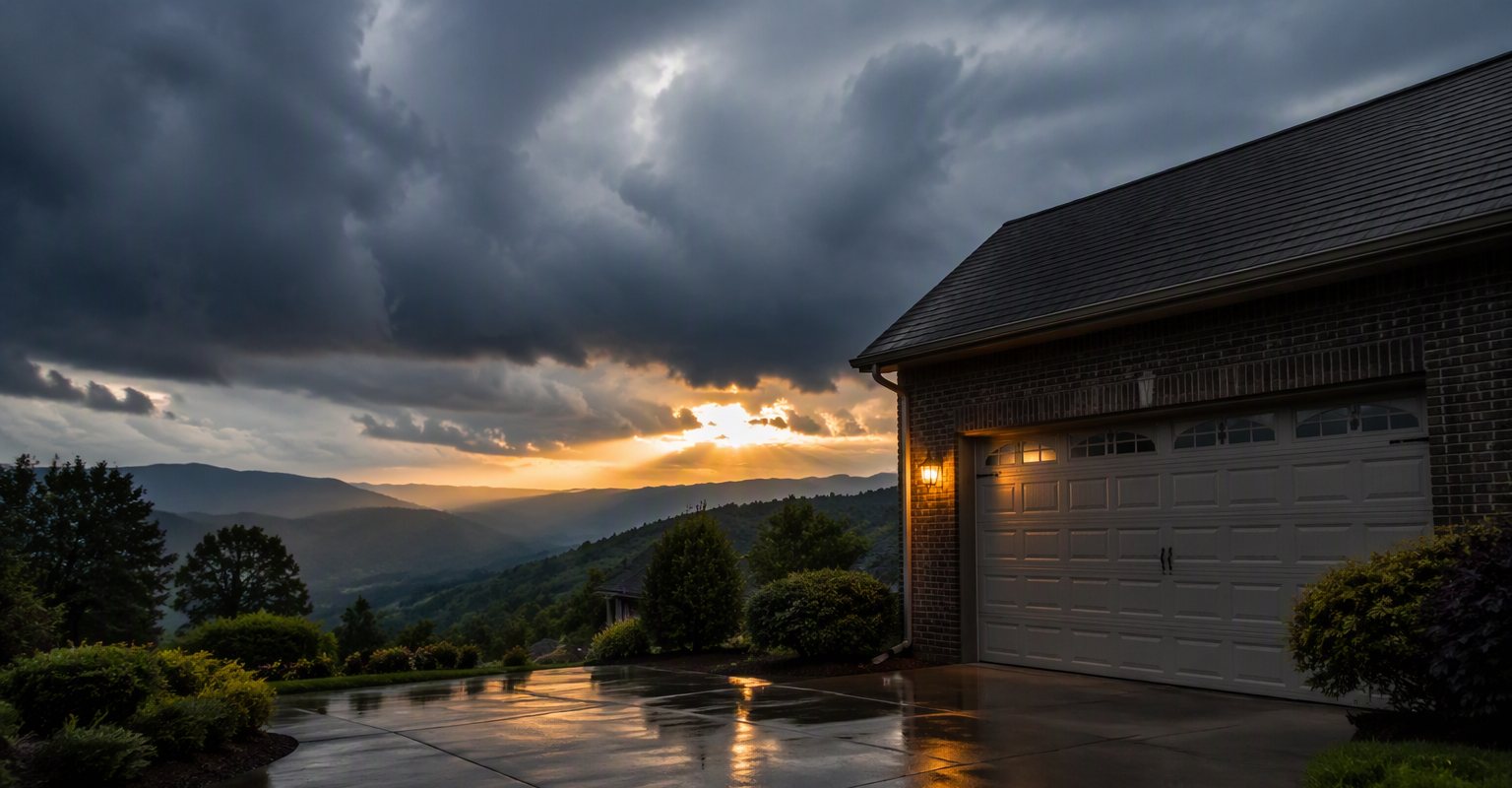
What foothill storms do to a door
The summer cells that build over the Blue Ridge and roll through the Catawba Valley hit garage doors three ways. Wind-driven debris and hail dent steel sections in a peppered pattern across whatever faces the storm. Falling limbs — the valley’s hardwoods are generous with them — crease panels and bend tracks. And a big gust against a door mid-travel can push rollers out of the tracks entirely, leaving the door hanging crooked and dangerous. Because the door is the biggest single surface on the front of the house, it usually shows the worst of any storm — worse than the siding, worse than the paint.
One panel or the whole door
The math runs on two questions. First: is your door’s model and color still in production? If yes, swapping the damaged sections alone is usually possible — a fraction of replacement cost, color-matched, done in a visit. Second: how many sections took damage? One or two dented panels argue for the swap; a door peppered across all four sections, or a door with bent tracks and damaged joints, flips the arithmetic — at that point a full replacement costs less than rebuilding the door piece by piece, and you get new hardware, seals, and warranty terms in the bargain.
The insurance angle, honestly
Storm damage is generally a covered homeowner’s claim, and the garage door belongs in it — adjusters on a roof claim routinely walk past the door nobody mentioned. Document the damage with photos immediately after the storm, wide shots and close-ups both. Then get the repair-or-replace quote in writing; it’s the number the claim needs. Filing deadlines are real, and “we got around to it in the fall” weakens a claim that a same-week photo would have made airtight.
After the repair: the next storm
Storm resistance in a replacement door comes from gauge, construction, and wind rating — heavier-gauge steel, insulated sandwich construction, and reinforced struts take impacts and gust loads that crease builder-grade single-layer panels. If you’re replacing after a storm claim, it’s worth asking how the options differ in wind and dent resistance. The valley will throw the same storm again; the question is whether the next door shrugs it off or collects another claim.