Sign one: the bang
The classic. A torsion spring is wound under enough tension to lift a two-hundred-pound door, and when it fractures it releases all of that in a single report — a bang from the garage loud enough to read as a gunshot or a falling shelf. Homeowners search the garage for what fell. Nothing fell; the spring above the door now has a two-inch gap in its coils, and the door it was carrying just became dead weight.
Signs two and three: the door that won’t, and the opener that can’t
No bang? The subtler version: the opener lifts the door a few inches and quits, or strains, hums, and gives up. Modern openers are built to guide a balanced door, not deadlift one — a broken spring makes the door feel twice its weight, and the opener’s safety logic shuts it down. If the door moves a few inches and stops, or the motor sounds like it’s fighting for its life, the spring is the first suspect, not the opener.
Signs four and five: the crooked climb and the hanging cable
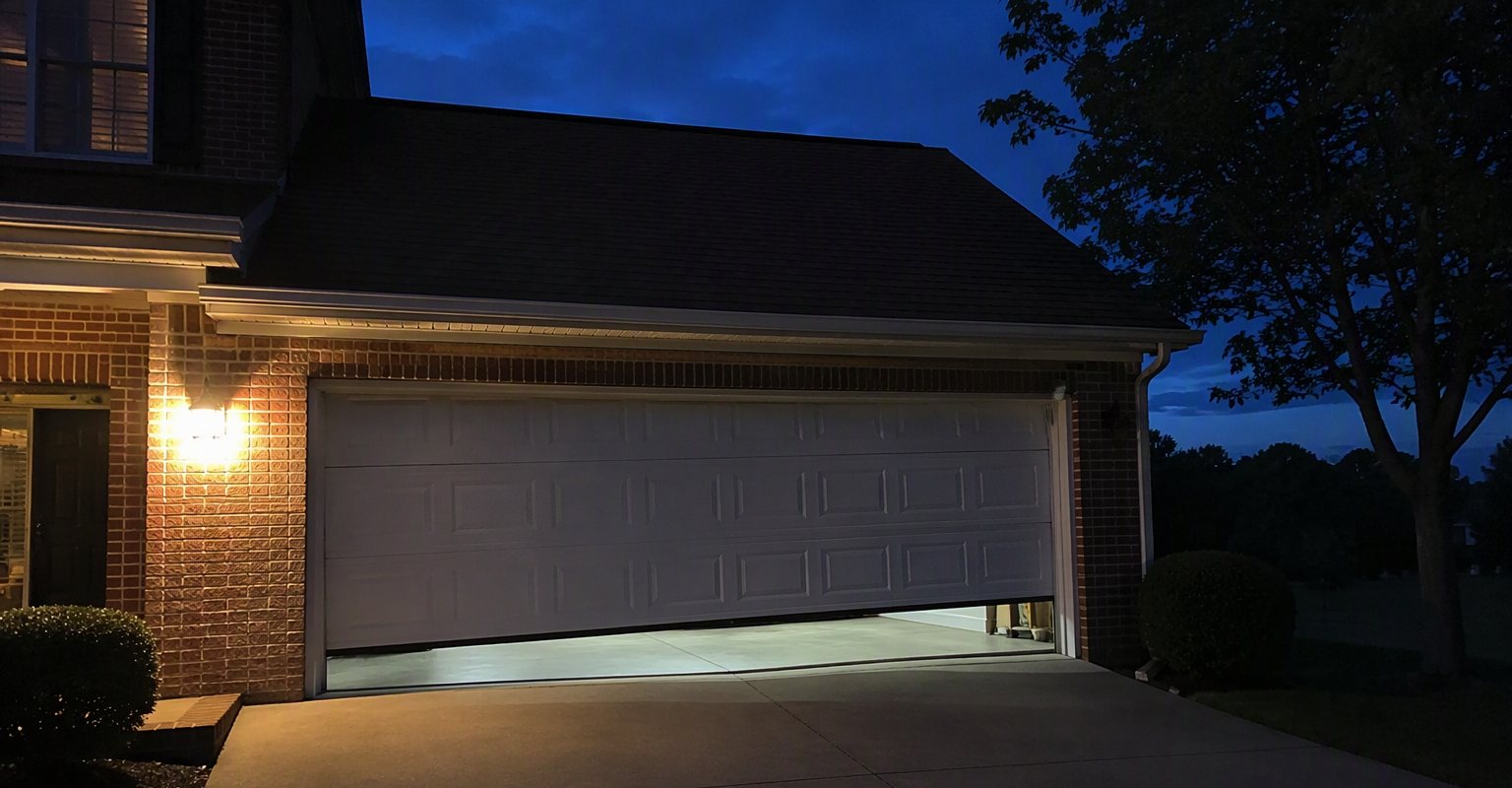
On a two-spring system, one broken spring leaves the other lifting alone — the door rises crooked, one side leading, binding in its tracks. And when spring tension disappears, the lift cables go slack: a cable dangling loose beside the door or sitting off its drum is a spring failure’s fingerprints. Any one of these five signs points to the same diagnosis, and all of them end in the same sentence: the door’s spring is done.
What not to do next
Don’t force the opener — repeated attempts strip gears and bend rails, turning a spring job into a spring-plus-opener job. Don’t pull the red release cord and try to muscle the door; without spring tension it’s a wall that can drop, and if the car is trapped, that’s a dispatch priority, not a weightlifting session. And don’t attempt the swap yourself — a loaded torsion spring releases in an instant if a winding bar slips, and it sends more DIYers to the ER than every other garage repair combined. Leave the door exactly where it is and make the call.
What the repair looks like
On the truck: springs matched to your door’s actual weight — because an undersized spring wears fast and an oversized one is dangerous — plus the cables, bearings, and hardware that get inspected while the system’s apart. On a two-spring door, both springs get replaced: they’ve lived identical lives, and the survivor is weeks behind. The job runs about an hour, and it ends with the door balanced to hover at waist height and tested through full cycles. High-cycle springs, rated well past the builder standard, are the upgrade worth asking about — the arithmetic favors anyone planning to stay in the house.