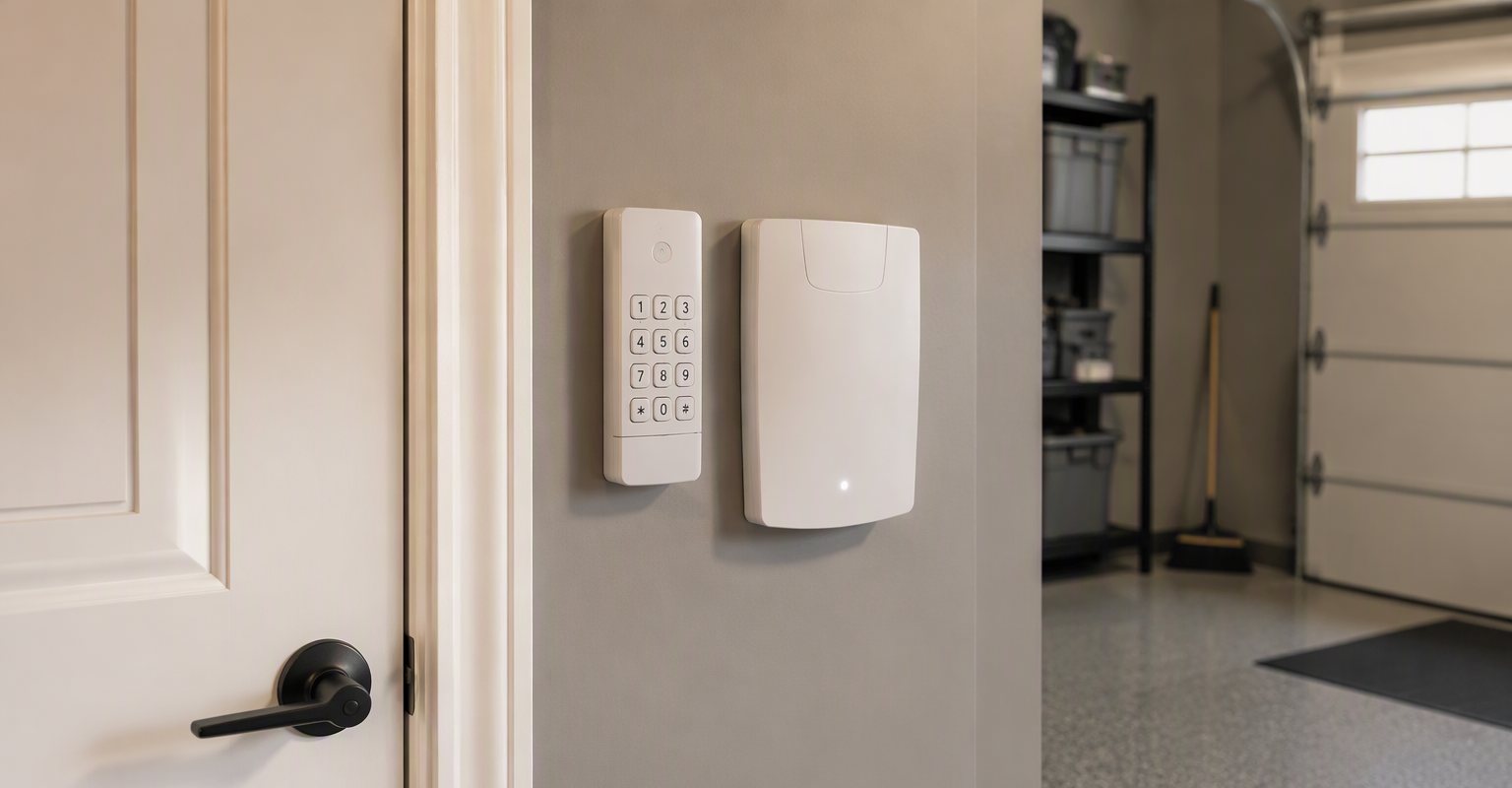
Battery backup isn’t optional here
The Catawba Valley loses power a few times a year — summer thunderstorm cells, the occasional tropical remnant pushing inland, winter ice on the lines — and for most households the garage is the main door to the house. Without a battery backup, an outage means pulling the red cord and hauling the door by hand in the dark. With one, the door keeps working through the outage like nothing happened. In storm country, it’s the single feature worth paying for.
Belt vs. chain, decided by your floor plan
Chain drives are the old workhorse: cheaper, louder, and fine for a detached garage. Belt drives run near-silent — and if there’s a bedroom or bonus room over the garage, the difference is the whole purchase. A chain unit under a bedroom will announce every 6 a.m. departure to the whole house; a belt unit won’t wake the dog. Detached shop or garage? Chain earns its keep. Attached and under living space? Belt, every time.
Security and the phone in your pocket
Any opener worth installing today runs rolling codes — the remote’s signal changes every press, so a scanner can’t clone it. If your current unit predates that standard, replacement is a security upgrade, not a luxury. Wi-Fi models add the genuinely useful trick: open, close, and check the door from your phone, which ends the “did I leave it open?” U-turn on Highway 70 for good.
Surge protection, the overlooked one
Valley thunderstorm months are hard on opener electronics — a lightning strike down the line can cook a logic board without ever hitting your house. Quality modern units build surge protection in, and a cheap surge protector on the outlet covers the rest. If your opener died the same night a storm rolled through, you already know this paragraph.
How much motor your door actually needs
Half-horsepower covers a balanced standard double door; three-quarter handles heavy insulated and oversized doors — and the key word is balanced. The opener is designed to guide a door the springs have already lifted, not deadlift a heavy one. A bigger motor on a bad door is the expensive way to mask a spring problem. Get the door balanced first, then size the opener — in that order, always.